
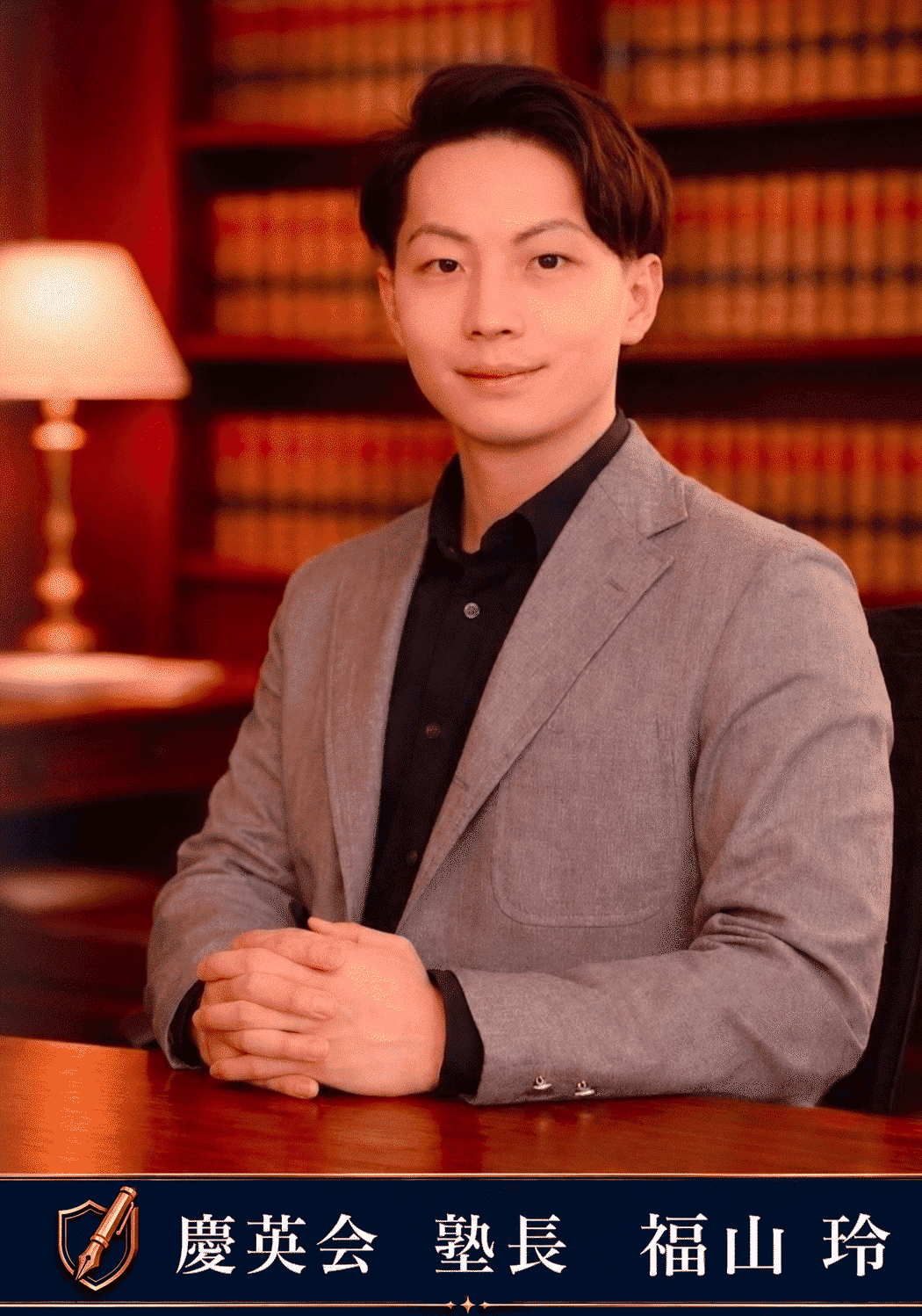

慶英会 塾長|慶應義塾大学卒・英検1級
中高一貫校の学校英語・NEW TREASURE・英検対策を専門とするオンライン個別指導塾です。塾長紹介
NEW TREASURE(ニュートレジャー)Stage5の全10Lessonを復習するなら、単語の暗記だけでなく、本文の根拠・筆者の主張・語彙・英作文を初見の英文で再現できるかを確認することが重要です。この無料総合テストには慶英会独自の英文10本と60問・全解答・解説を収録しました。各Lessonの題材に関連した別英文で、似たテーマでも読解力が定着しているか診断できます。
【独立教材・対象版】Z会の『NEW TREASURE ENGLISH SERIES Third Edition Stage5』の主題を確認して制作したオリジナル演習です。教科書の本文・語句リスト・出版社の解答を転載したものではなく、校内で出題される問題の再現でもありません。学校の使用版・定期テスト範囲表が優先されます。事例の学校・実験・団体は問題用の架空設定です。
Stage5の10Lesson総復習|自分の弱点を測る手順
- 目安時間:各Lesson6問を8分以内、全10題で約80分を目標にする(慶英会独自の学習目安)。
- 問題の構成:内容2問・語彙または根拠1問・和訳1問・英作文1問・要点説明1問。英文はすべてオリジナル。
- 復習:正誤だけでなく、本文のどの語句が根拠だったか、限定表現を落としていないかを記録する。
- 問題と解答:先に全問解いてから画面下部の「全解答」で採点する。
- 学校対応:学校配布のWorkbook・本文プリント・授業ノートの指定箇所とは別に演習する。
得点のみでなく、根拠不明の正解を見つけることが重要です。例えば「選択肢が多ければ必ず悪い」「研究で差が出たから因果関係が証明された」と回答した場合、本文のmay・can・not all・under these conditionsといった限定を見落としている可能性があります。
慶英会独自60問|Lesson1〜10の初見英文10題
Lesson1|多言語社会と共通の象徴(6問)
慶英会オリジナル英文:In a fictional town, a school invited families to share songs in the languages they spoke at home. Twenty families took part, but several students said they did not understand the lyrics. The organizers added brief explanations in more than one language at the next event. They hoped that unfamiliar sounds would become less intimidating. A teacher warned, however, that enjoying a performance was not the same as understanding a community’s history. The event could encourage curiosity, but it could not demonstrate that all families felt equally included. The students therefore collected voluntary comments and made the next meeting a discussion rather than a competition. Their aim was to make participation easier while recognizing that belonging cannot be measured by applause alone.
問1. What change did the organizers make at the second event?
問2. Did the event prove that all families were equally included?
問3. Which word best replaces intimidating: welcoming / frightening / predictable?
問4. Translate: Enjoying a performance was not the same as understanding a community’s history.
問5. Write in English: 「歌は対話を始めるきっかけになりうる」。
問6. What is the lesson of the case?
Lesson2|研究の面白さと証拠(6問)
慶英会オリジナル英文:A fictional science club investigated whether handwritten titles made student posters easier to remember than printed titles. Thirty volunteers viewed one of two sets of posters and answered questions an hour later. The club did not find a clear difference, although several students preferred the handwritten style. Its report separated preference from memory performance. The team also admitted that different pictures had appeared beneath the titles, so the comparison was not perfectly controlled. A local newspaper wanted to report that handwriting improves memory, but the club rejected the headline. Interesting questions deserve careful methods, not automatic certainty. Even an inconclusive result can help researchers design a more precise comparison by revealing which variables were not controlled in the first attempt.
問7. What two outcomes did the club distinguish?
問8. What was one weakness of the comparison?
問9. What does inconclusive mean here?
問10. Translate: Interesting questions deserve careful methods, not automatic certainty.
問11. Write in English: 「この結果は記憶力の改善を証明しない」。
問12. Why was the proposed headline rejected?
Lesson3|選択肢と選びやすさ(6問)
慶英会オリジナル英文:A fictional library presented twenty books to one group of students as a single long list. A second group saw the same twenty books arranged into four themes. More students in the second group could quickly explain why they preferred a title. However, the librarians did not know whether those students would finish their books or enjoy them more. The number of options had not changed; only their organization had. One student suggested that a clear structure can reduce unnecessary searching without removing freedom of choice. Another noted that grouping could hide unusual titles from readers who enjoy browsing. The library decided to test a design that offered both recommendations and access to the complete collection.
問13. How many books did each group see?
問14. What changed between the groups?
問15. Why could the librarians not conclude that satisfaction increased?
問16. Translate: The number of options had not changed; only their organization had.
問17. Write in English: 「情報を整理すると選択が容易になることがある」。
問18. What possible drawback of grouping was mentioned?
Lesson4|難民支援と支援者の協働(6問)
慶英会オリジナル英文:In an invented account, a medical volunteer joined a multilingual community center near a border. She initially believed that preparing more printed instructions would solve most appointment problems. After speaking with families, she learned that some people could not attend clinics because buses stopped early. Others needed help understanding forms. The team therefore consulted interpreters, transport workers and residents instead of relying on the volunteer’s first assumption. It improved one information sheet but made no claim that the entire community had gained medical access. The volunteer later wrote that effective service begins by listening to the people it aims to support. Her role mattered, but so did the knowledge and decisions of local participants. The story illustrates cooperation, not the idea that one person solved displacement.
問19. What initial assumption did the volunteer make?
問20. Name one additional barrier the families described.
問21. Who helped the team redesign its approach?
問22. Translate: Effective service begins by listening to the people it aims to support.
問23. Write in English: 「一人の支援者がすべてを解決したわけではない」。
問24. What was the main limitation of the reported improvement?
Lesson5|海洋環境と数値の分母(6問)
慶英会オリジナル英文:A school group observed litter in a selected section of a riverbank before and after a cleanup. It counted ninety visible objects in the morning and thirty remaining afterward. The students calculated that sixty objects, or about two-thirds of those observed, had been removed. The teacher reminded them that the number did not represent all rubbish flowing into the ocean. Rain could bring new waste the next day, and some objects were hidden from view. The students proposed observing the same area over several weeks and speaking with local waste workers about possible sources. Their report emphasized that removing litter is useful but prevention and monitoring are needed for longer-term progress. A local observation becomes more informative when its location, timing and limits are clearly stated.
問25. How many objects were initially counted?
問26. How many were removed?
問27. Approximately what proportion was removed?
問28. Translate: The number did not represent all rubbish flowing into the ocean.
問29. Write in English: 「清掃後も新しいごみが流れ込む可能性がある」。
問30. What two longer-term responses were proposed?
Lesson6|遺伝子研究とモデルの限界(6問)
慶英会オリジナル英文:A fictional article describes a gene-disruption model used to investigate a biological question. The researchers report that an observed characteristic differed between two groups under specified conditions. A student summarizes the article as proof that the same gene causes a particular disease in every human patient. The teacher corrects the summary. A biological model can help test a hypothesis, but species differences and other factors limit what can be inferred. Before accepting a broad claim, readers should ask whether the genetic change was confirmed, how the characteristic was measured and whether appropriate comparison groups were used. They should also distinguish experimental findings from proposed medical applications. The ability to recognize uncertainty does not reduce the value of science; it makes the research question clearer and protects readers from exaggerated conclusions.
問31. What was the article directly reporting?
問32. What incorrect conclusion did the student draw?
問33. What does inferred mean?
問34. Translate: Species differences and other factors limit what can be inferred.
問35. Write in English: 「このモデルの結果だけでは人への治療効果を証明できない」。
問36. Name one question a reader should ask about study design.
Lesson7|伝統食品と商品開発(6問)
慶英会オリジナル英文:A fictional food company tested two versions of a fermented soybean product. The newer version was designed to have a milder aroma, but not all customers preferred it. Some found the smell more pleasant while others liked the stronger taste associated with the existing product. The marketing team first described the new version as better for everyone. A researcher asked them to remove the claim because the taste test had not shown a universal preference. The company instead said the prototype was intended for customers seeking a less intense aroma. The revised explanation was both narrower and more informative. The team also recognized that keeping two versions would create extra production costs. A successful product decision therefore needed evidence about customer preferences, production feasibility and clearly stated benefits.
問37. Which attribute was the new version designed to change?
問38. Did all customers prefer the new version?
問39. Why was ‘better for everyone’ rejected?
問40. Translate: The revised explanation was both narrower and more informative.
問41. Write in English: 「顧客は異なる製品の特徴を重視する」。
問42. What trade-off might maintaining two versions create?
Lesson8|動物の集団行動とモデル(6問)
慶英会オリジナル英文:A fictional computer simulation used small dots to represent moving animals. Each dot adjusted its direction after observing nearby dots. Without a central leader, the digital group began to move in a coordinated pattern. The class compared the result with videos of actual birds but did not claim that it had discovered the precise rules followed by every species. Real animals experience conditions absent from the program, including changing weather and danger. The teacher asked students to distinguish an illustration of a possible mechanism from direct evidence about nature. The simulation suggested a question worth investigating, not a universal explanation. To improve the project, the class decided to state its assumptions and identify observations that might challenge the model.
問43. What caused the dots to adjust direction?
問44. Was a central leader required in the simulation?
問45. Why can the result not prove the rules followed by all birds?
問46. Translate: The simulation suggested a question worth investigating, not a universal explanation.
問47. Write in English: 「集団全体の動きは個々の相互作用から生じうる」。
問48. What should be stated to improve the study?
Lesson9|ストレスと支援(6問)
慶英会オリジナル英文:Before a school speech, some students become more alert and prepare carefully, while others find the pressure difficult to manage. A teacher says that short-term challenges can sometimes encourage useful preparation, but that continuing distress should never be celebrated as proof of dedication. Students should have clear instructions, reasonable time to practice and access to support. A student reporter writes that a little pressure always improves performance. The teacher rejects the word always, since no universal effect has been demonstrated. The class replaces the headline with a balanced statement: manageable pressure may sometimes help preparation, whereas harmful or persistent stress needs attention. The distinction matters because an apparent benefit in one situation cannot justify recommending more strain to everyone.
問49. What potential effect of short-term pressure is described?
問50. What should not be celebrated?
問51. Why was always rejected?
問52. Translate: An apparent benefit in one situation cannot justify recommending more strain to everyone.
問53. Write in English: 「短期的な緊張が時には準備に役立つ」。
問54. What three supports were recommended?
Lesson10|能力主義と公平な評価(6問)
慶英会オリジナル英文:An imaginary scholarship committee debated whether one examination should determine every award. Some members argued that a clear score rewards preparation and reduces arbitrary decisions. Others noted that the same score can reflect unequal opportunities to study. The committee considered adding a structured writing task to evaluate reasoning, but that would demand time and careful assessment standards. The members agreed that neither a score nor a personal interview could automatically capture all relevant qualities. They first needed to define what the award was intended to recognize. A statistical association between educational opportunity and achievement could inform policy without determining any particular applicant’s future. The committee decided to evaluate its methods after the program, rather than announce that a new system had solved every problem of fairness.
問55. What was the committee’s main decision question?
問56. Why did some members support a clear score?
問57. What might an additional writing task cost?
問58. Translate: A statistical association could inform policy without determining any particular applicant’s future.
問59. Write in English: 「まず評価の目的を明確にするべきだ」。
問60. What must be defined before choosing assessment methods?
全60問の解答と詳しい理由
Lesson1|問1〜6
解答1:They added short multilingual explanations.
解説:次回のイベントで複数言語の説明を追加した。
解答2:No.
解説:could not demonstrate の限定を読む。
解答3:frightening
解説:unfamiliar sounds が人をひるませる文脈。
解答4:発表を楽しむことと、その共同体の歴史を理解することは同じではなかった。
解説:A is not the same as Bの対比。
解答5:A song can be a starting point for dialogue.
解説:canで可能性に限定。
解答6:A shared event may encourage curiosity without proving equal inclusion.
解説:活動の意図と実証された結果を分ける。
Lesson2|問7〜12
解答7:Style preference and memory performance.
解説:好みと記憶テストの結果は別指標。
解答8:Different pictures appeared beneath the titles.
解説:タイトル以外の条件が一致していなかった。
解答9:Not sufficient to support a definite conclusion.
解説:決定的な結論を導けない状態。
解答10:興味深い問いには、無条件の確信ではなく慎重な方法がふさわしい。
解説:not A but Bの対比。
解答11:These results do not prove an improvement in memory.
解説:do not proveで限界を示す。
解答12:It claimed a proven benefit despite no clear controlled result.
解説:好みの報告を記憶の改善と混同していた。
Lesson3|問13〜18
解答13:Twenty.
解説:二群とも同じ20冊。
解答14:The organization of the options.
解説:選択肢の総数ではなく提示方法。
解答15:They did not measure reading completion or enjoyment.
解説:測定していない成果を断定できない。
解答16:選択肢の数は変わっておらず、変わったのは配置方法だけだった。
解説:過去完了の対比とonlyの限定。
解答17:Organizing information can make choices easier.
解説:make+O+Cを使う。
解答18:It might hide unexpected books from browsers.
解説:整理に伴うトレードオフ。
Lesson4|問19〜24
解答19:More printed instructions would solve most appointment difficulties.
解説:印刷資料だけを重視していた。
解答20:Limited bus services or difficulties with forms.
解説:交通や手続きの障壁。
解答21:Interpreters, transport workers and residents.
解説:一人の功績ではなく協働。
解答22:有効な支援は、支援対象となる人々の声を聴くことから始まる。
解説:it aims to supportがpeopleを修飾。
解答23:One volunteer did not solve every problem.
解説:全て解決したという過度な主張を否定。
解答24:One clearer sheet did not prove universal access to medical care.
解説:個別の成果と社会全体への効果は違う。
Lesson5|問25〜30
解答25:Ninety.
解説:選んだ河岸区間での架空値。
解答26:Sixty.
解説:90−30=60。
解答27:Two-thirds, or about 66.7 percent.
解説:60÷90。
解答28:その数値は海へ流れ込むすべてのごみを表してはいなかった。
解説:分母と対象範囲を保持。
解答29:New litter may arrive even after a cleanup.
解説:mayで可能性を示す。
解答30:Repeated monitoring and investigating waste sources.
解説:回収と予防の両面。
Lesson6|問31〜36
解答31:A difference in an observed characteristic between model groups.
解説:指定条件下のモデルでの観測。
解答32:That the gene causes the disease in every human patient.
解説:動物モデルからヒト全例への飛躍。
解答33:Concluded or reasoned from evidence.
解説:証拠から推論する。
解答34:生物種の違いと他の要因が、推論できる範囲を制限する。
解説:what can be inferredは名詞節。
解答35:Results from this model alone cannot prove effectiveness in humans.
解説:aloneで根拠の限定を示す。
解答36:Whether the change was confirmed, the outcome was measured, or comparisons were appropriate.
解説:本文にある設計チェック。
Lesson7|問37〜42
解答37:Aroma intensity.
解説:匂いの強さ。
解答38:No.
解説:not allに注意。
解答39:The test did not establish a universal preference.
解説:調査結果を超える広告。
解答40:修正された説明は範囲がより限定的で、情報としてもより役立つものだった。
解説:both A and B。
解答41:Customers value different product attributes.
解説:valueは動詞で「重視する」。
解答42:Greater choice but additional production costs.
解説:選択の幅と費用の調整。
Lesson8|問43〜48
解答43:Movements of nearby dots.
解説:局所的な相互作用。
解答44:No.
解説:中央の司令がなくても協調動作した。
解答45:A simplified digital model lacks many real-world conditions.
解説:モデルと実在動物は違う。
解答46:シミュレーションは、普遍的な説明ではなく、調査する価値のある問いを示唆した。
解説:not A but Bの論理を保つ。
解答47:Collective movement can emerge from local interactions.
解説:can emergeで可能性。
解答48:Its assumptions and observations that might challenge the model.
解説:反証可能性を意識。
Lesson9|問49〜54
解答49:It may encourage preparation in some students.
解説:限定つきの効果。
解答50:Persistent distress as a supposed sign of dedication.
解説:慢性的な苦痛を美化しない。
解答51:A universal benefit had not been demonstrated.
解説:全称表現の根拠不足。
解答52:一つの状況で見られた利点だけでは、全員により大きな負担を勧める根拠にはならない。
解説:cannot justify+動名詞を正確に訳す。
解答53:Short-term pressure can sometimes help preparation.
解説:can sometimesは限定。
解答54:Clear instructions, reasonable preparation time and access to help.
解説:学校が整える条件。
Lesson10|問55〜60
解答55:Whether one test score should determine every award.
解説:単一評価指標の妥当性。
解答56:It rewards preparation and may reduce arbitrary decisions.
解説:評価の透明性という長所。
解答57:Time and careful assessment work.
解説:測定の幅と事務負担。
解答58:統計的な関連は政策の参考になりうるが、特定の応募者の将来を決定するものではない。
解説:without+動名詞、個人と集団の区別。
解答59:We should first clarify the purpose of the assessment.
解説:clarify the purpose。
解答60:The qualities the scholarship intends to recognize.
解説:測定の目的を先に定義。
自己採点と14日間の復習計画
各問1点、60点満点の慶英会独自診断です。設問は教科書の正式な配点や学校の合格基準を再現するものではありません。模範解答以外でも、意味・文法・設問条件が一致する自然な英文は正答と認めます。解答の丸写しができても、本文と違う条件を自分で補った場合は理由説明を再確認してください。
- 50〜60点:大きな欠落は少ない。誤答したLessonだけ別記事の32問に進む。
- 35〜49点:英作文・和訳・内容根拠のどれが多く失点したかを分類し、2周目で修正する。
- 0〜34点:各Lessonを2〜3題ずつ分け、読み直し→6問→32問の順で固める。
この点数帯は教材利用の便宜的な目安であり、実測データに基づく学力判定や学校成績の予測ではありません。
- 1〜3日目:Lesson1〜3。主題・根拠・限定語をチェックする。
- 4〜6日目:Lesson4〜6。人物の行動、数値の分母、実験の限界をまとめる。
- 7〜9日目:Lesson7〜9。製品の評価、集団行動のモデル、健康論説の条件を整理する。
- 10〜11日目:Lesson10と間違えた文の再和訳・再英作文。
- 12日目:学校の正式なテスト範囲と照合し、漏れた語彙・文法を補う。
- 13日目:誤答した6問セットだけ時間を測って再テストする。
- 14日目:全60問から苦手だった問題を選び、自分の解答と根拠を声に出して説明する。
よくある質問(FAQ)
Q. この60問はZ会のStage5本文・定期テスト過去問ですか?
A. いいえ。出版社・学校の本文や問題を転載していません。各Lessonの題材に関連する慶英会独自の初見英文10題と演習60問です。
Q. Stage5は長文をすべて和訳できないと成績が上がりませんか?
A. 全訳は構文を確認する方法の一つですが、設問の根拠を探す、主張と反論を整理する、和訳で否定と数量を落とさない、英語で答えられるといった技能も必要です。
Q. どのLessonから取り組むべきですか?
A. まず学校のテスト範囲に該当するLessonの6問を解いてください。誤答が多いテーマは記事中のLesson別32問へ進み、詳細な根拠解説を確認する方法が効率的です。
慶英会の学習相談・無料体験
NEW TREASURE Stage5は未知の英文を読み、根拠に基づく説明・英作文・要約へつなぐことが重要です。総合60問で間違えた番号と学校の直近の答案を照合すると、語彙不足、構文の読み違い、記述の条件落ちを切り分けられます。慶英会では中高一貫校の学校進度に沿ったオンライン個別指導を提供しています。最大1か月無料体験・学習相談はこちら。
全10Lesson総合テストの後に:文章は読めるが構文で失点した場合は下線部和訳48問、英単語は分かるのに正しい語順にできない場合は語順整序48問で、該当する技能だけを復習できます。
参考にした主な公式情報
Z会『NEW TREASURE ENGLISH SERIES Third Edition Stage5』/Z会『NEW TREASURE』公式教材案内。本稿は各Lessonに関連する技能を練習する独立教材です。
最大1か月完全無料体験・学習相談受付中
最大1か月の完全無料体験をご案内
学校教材・学力・目標に合わせた個別指導
入塾前に授業の進め方や講師との相性をお確かめください。
学校英語・定期テスト・英検の学習相談にも対応します。
保護者様の教育相談も無料で承ります。
1.学年 2. 学習目標 3.体験ご希望をお送りください。
体験の期間・回数・担当講師・日程は、ご希望と受付状況を確認してご案内します。
慶英会 塾長|慶應義塾大学卒・英検1級。中高一貫校の学校英語・NEW TREASURE・英検対策を専門としています。塾長の経歴・指導方針を確認する