
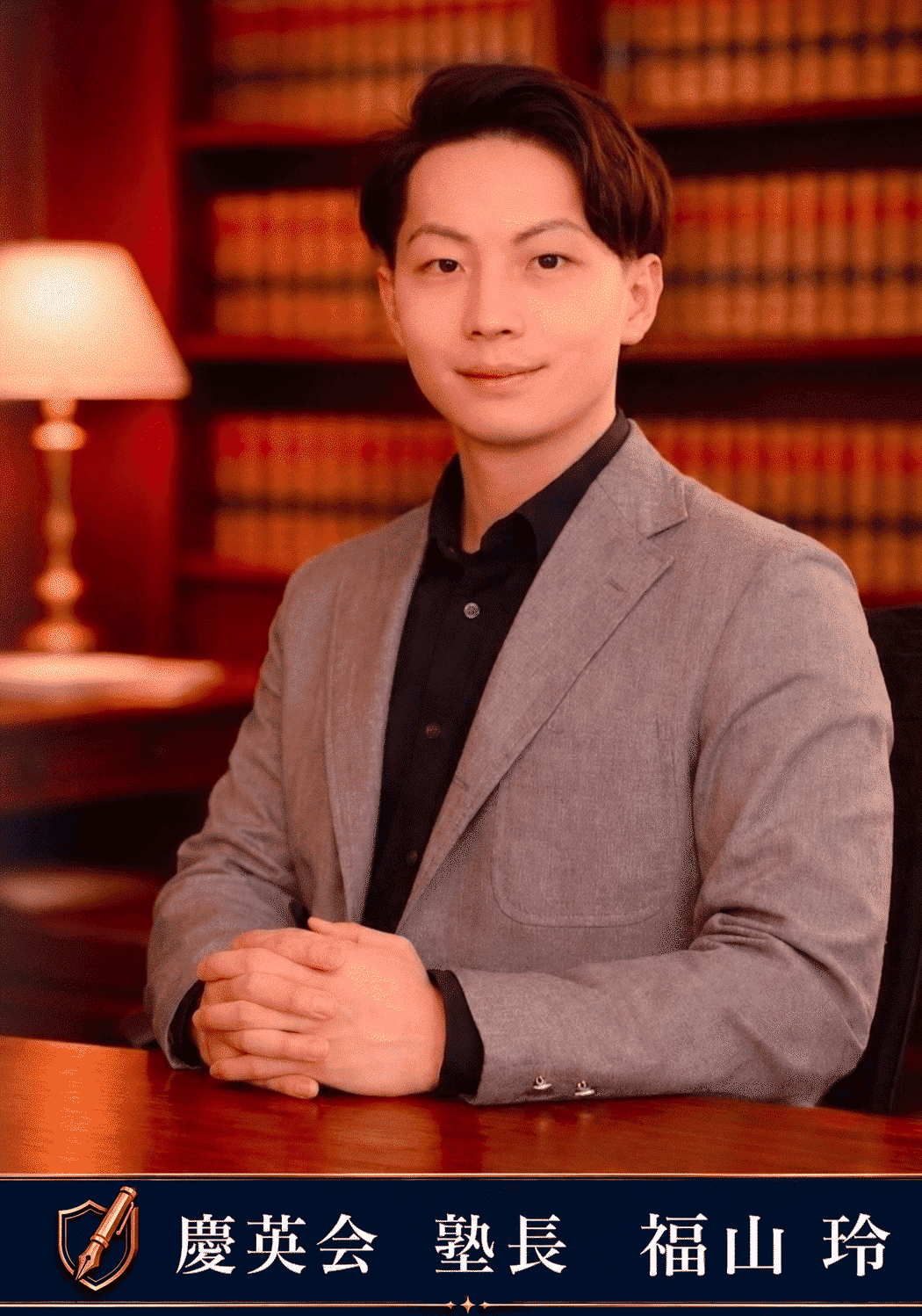

慶英会 塾長|慶應義塾大学卒・英検1級
中高一貫校の学校英語・NEW TREASURE・英検対策を専門とするオンライン個別指導塾です。塾長紹介
英検2級リスニングの説明文では「なぜ問題が起きたか」「どんな対策を試したか」「何が観察されたか」「まだ分からないことは何か」を区別できるかが重要です。becauseで理由、so thatで目的、as a resultで結果が示されますが、「目標」と「実際に証明された効果」は同じではありません。慶英会では独自短文12問に加え、学校・図書館・交通・環境などのオリジナル説明文8本32問の全44問を制作しました。4択の正答と英語の根拠をすべて掲載しています。録音音声は付属しないため、台本を隠して一度読み上げてもらい、公式音源の初見問題で聴解力を確認してください。
結論|説明文を「問題→対応→観察→限界」の4段階で聞く
例えば「校門前に水がたまる」→「庭を試験設置した」→「水が少ない日を観察した」→「降水量を同条件で測っておらず因果は断定できない」という流れを把握します。提案したこと、実施したこと、観察したこと、証明できたことを一つにまとめないのがポイントです。また、before/afterの数字が出ても、比較条件が違えば改善の原因は確定しません。
英検2級リスニング第2部の公式形式
公益財団法人日本英語検定協会の英検2級の試験内容によると、リスニングは会話の内容一致15問と、物語・説明文の内容一致15問で、いずれも放送1回、印刷された4択です。全30問・約25分です。科学・自然・環境・教育・仕事などは主な題材例ですが、因果関係の問題が一定数出るとは限りません。協会公式の過去問・リスニング音源を利用し、本試験の問題文の長さと速度を確認してください。本記事では一つの説明文から4問を作り、根拠の発見と復習に重点を置いています。これは当塾独自の教材構造で、公式試験と同じではありません。
because・therefore・however・may|12表現で論理を聞き分ける
| 表現 | 働き | 設問で確かめること |
|---|---|---|
| because / since / due to | 理由・原因 | なぜ起きたか |
| so / therefore / as a result | 結果 | その後何が起きたか |
| so that / in order to | 目的 | 狙いであり成功の証明ではない |
| however / although | 逆接 | 予想と違う情報・制約 |
| instead of | 選ばなかった代替案 | 最終的に何をしたか |
| suggest / hope / plan | 提案・希望・計画 | 実施・達成したと誤読しない |
| may / might / could | 可能性 | 断定ではない |
| has not yet been shown | まだ立証されていない | 観察と結論の差 |
| trial / pilot | 試験運用 | 正式導入とは異なる |
| measure / record / observe | 測定・記録・観察 | 何が観測され何が未測定か |
| per visitor / total | 一人当たり/合計 | 分母の有無 |
| correlation / cause | 相関/原因 | 同時の変化だけで因果は証明できない |
語彙より構造を優先:「なぜ」ならbecauseの後ろ、「何のため」ならso thatの後ろ、「結局どうなった」ならresultや実施済み動詞、「まだ分からない」ならhowever・not yet・mayが付く文を確認します。選択肢が「全ての学校」「必ず改善」と広く断定していないかも見落とさないようにします。
慶英会オリジナル短文12問|理由・目的・結果・限界を分類
基礎1|会場を移動した理由は何か。
Because the hall was noisy, the talk moved upstairs.
正答・判断の理由
元の会場がうるさかったため。
becauseの後ろが理由。
基礎2|標識を追加した目的は何か。
The town added signs so that visitors could find the park.
正答・判断の理由
来訪者が公園を見つけられるようにするため。
so thatは目的。
基礎3|列車に乗った理由は何か。
The bus stopped running, so passengers took a train.
正答・判断の理由
バスの運行が止まったため。
soの前が原因、後が結果。
基礎4|売上は増えたか。
Although visitor numbers increased, sales fell.
正答・判断の理由
いいえ、減った。
althoughは逆接で、訪問者数と売上は別指標。
基礎5|水使用量の削減は既に実現したか。
The researchers hope to reduce water use next year.
正答・判断の理由
まだ目標段階。
hope toは期待・目標で結果ではない。
基礎6|調査で何を測定したか。
The survey measured preferences, not learning progress.
正答・判断の理由
好み。
not learning progressで効果測定を否定。
基礎7|都市全体で効果が証明されたか。
The pilot ran for six weeks in one neighborhood.
正答・判断の理由
証明されていない。
one neighborhoodの試行。
基礎8|時間削減は数値で実証されたか。
The system may save time, but no figures are available yet.
正答・判断の理由
されていない。
may と no figures yet。
基礎9|屋内に移動した理由は何か。
Since it rained heavily, the event moved indoors.
正答・判断の理由
激しい雨。
sinceはここではbecauseと同じ理由。
基礎10|市が選んだ対応は何か。
Instead of replacing the library, the city repaired it.
正答・判断の理由
図書館の修理。
instead ofが採らなかった選択肢を示す。
基礎11|増えた数は。
The number of applications rose from twenty to thirty.
正答・判断の理由
10件。
30−20=10。
基礎12|拡大は確定か。
The city will expand the project only if the trial succeeds.
正答・判断の理由
試験成功が条件。
only ifで必要条件。
独自8説明文・内容一致32問|全文台本と正答根拠
以下はすべて慶英会が制作した架空の研究・事業・学校活動です。文中の人数・訪問数・寄付数などは実在の成果を示す公開データではありません。初回は設問を見てから、英文を隠し一度読み上げを聞いて回答します。次に台本を読み、問題・対策・観察・未確定の4項目へ整理してから再回答してください。
説明文1|学校の雨水庭園|問題・対策・初期観察
At a fictional middle school, rainwater used to collect near the main gate after storms. This made the entrance difficult to use. A student science club suggested creating a small garden to absorb some of the water. The school agreed to test the idea beside the gate for six weeks. During the test, students observed less water on the path on several rainy days. However, the school did not measure the amount of rain in the same way every day, so it cannot say how much of the change was caused by the garden. The science club will collect better data before proposing another garden.
問13.What problem motivated the project?
- High electricity bills.
- Water collecting at the gate.
- Noise from traffic.
- Not enough parking.
正答と英文の根拠を確認
B.Water collecting at the gate.
rainwater used to collect near the main gate。
問14.What solution was tested?
- A drainage tunnel.
- A taller gate.
- A small garden.
- A new road.
正答と英文の根拠を確認
C.A small garden.
creating a small garden。
問15.How long did the initial test last?
- Six weeks.
- Three days.
- Six months.
- One year.
正答と英文の根拠を確認
A.Six weeks.
for six weeks。
問16.Why is the exact effect uncertain?
- Students did not observe rain.
- The gate was removed.
- No one joined the club.
- Rainfall was not measured consistently.
正答と英文の根拠を確認
D.Rainfall was not measured consistently.
did not measure the amount of rain in the same way。
この説明文の学習テーマ:初期の観察と十分でない測定の区別
説明文2|地域図書館の夜間開館|利用増加と因果の慎重な解釈
A community library in a fictional town tried remaining open until nine on Fridays instead of closing at seven. Before the change, about sixty people visited on an average Friday evening during the hours being studied. During a four-week trial, that number was around eighty-five. Staff members were pleased, but they did not conclude that the longer hours alone had caused the increase. The town also held a popular book festival that month. A new survey will ask visitors whether they came because of the schedule, the festival, or another reason. The library will decide next month whether to keep the longer hours.
問17.What change did the library test?
- Opening only on Mondays.
- Closing at five.
- Remaining open until nine on Fridays.
- Replacing all books with computers.
正答と英文の根拠を確認
C.Remaining open until nine on Fridays.
remaining open until nine on Fridays。
問18.Approximately how many visits were counted during the trial?
- Sixty.
- Eighty-five.
- One hundred and fifty.
- Two hundred.
正答と英文の根拠を確認
B.Eighty-five.
that number was around eighty-five。
問19.What other event may have influenced visitor numbers?
- A book festival.
- A school holiday abroad.
- A sports match.
- A concert at the station.
正答と英文の根拠を確認
A.A book festival.
the town also held a popular book festival。
問20.What will the new survey investigate?
- Book prices.
- Building temperature.
- The cost of electricity.
- Reasons for visiting.
正答と英文の根拠を確認
D.Reasons for visiting.
ask visitors whether they came because of the schedule, festival, or another reason。
この説明文の学習テーマ:利用者数の増加と要因の確定を分離
説明文3|市バスの乗車案内|わかりづらい表示への対策
In a fictional city, tourists often waited at the wrong side of a bus terminal because signs for two routes looked similar. The transport office first considered adding more buses. However, staff noticed that many passengers were confused by the information rather than by a lack of buses. They therefore installed signs with different symbols and clearer route numbers. During the first month, fewer passengers asked which platform to use. The office plans to check whether people also boarded the correct buses more often. The number of questions at the desk alone does not tell officials everything about the service.
問21.What was the initial problem?
- Tickets were too expensive.
- Passengers mixed up bus platforms.
- Buses broke down frequently.
- The terminal closed early.
正答と英文の根拠を確認
B.Passengers mixed up bus platforms.
waited at the wrong side … signs … looked similar。
問22.What was the main action taken?
- Hiring drivers.
- Buying larger buses.
- Changing the departure time.
- Adding clearer signs and numbers.
正答と英文の根拠を確認
D.Adding clearer signs and numbers.
installed signs with different symbols and clearer route numbers。
問23.What decreased in the first month?
- Questions about platforms.
- Ticket sales.
- The number of tourists.
- Daily bus routes.
正答と英文の根拠を確認
A.Questions about platforms.
fewer passengers asked which platform to use。
問24.What will the office investigate next?
- Whether snacks are available.
- Whether the parking lot is full.
- Whether more passengers board the correct buses.
- Whether all routes should close.
正答と英文の根拠を確認
C.Whether more passengers board the correct buses.
check whether people also boarded correct buses。
この説明文の学習テーマ:案内改善後の質問減と目的の達成を分ける
説明文4|パン屋の食品ロス|寄付前の安全確認
A fictional neighborhood bakery noticed that it often had unsold bread when it closed. The owner wanted to reduce food waste and suggested sharing suitable bread with a nearby community group. Staff first set a rule: only fresh, safely stored items could be donated, and the group had to collect them before the store closed. During a four-week trial, the bakery donated 120 loaves. That is the number of loaves, not the number of families who received them. The owner says the program appears promising, but the bakery has not yet measured its total waste over a full year.
問25.What problem was the bakery trying to address?
- Food waste.
- A shortage of flour.
- Too many customers.
- An old oven.
正答と英文の根拠を確認
A.Food waste.
unsold bread … reduce food waste。
問26.Which bread may be donated?
- All unsold food without checking.
- Only fresh, safely stored items.
- Only frozen items.
- Bread sold the previous year.
正答と英文の根拠を確認
B.Only fresh, safely stored items.
only fresh, safely stored items。
問27.What does the number 120 represent?
- Families helped.
- Customers at the shop.
- The number of days.
- Loaves of donated bread.
正答と英文の根拠を確認
D.Loaves of donated bread.
120 loaves, not number of families。
問28.What has not yet been measured?
- The number of staff.
- The opening hours.
- The total waste over a year.
- The price of each loaf.
正答と英文の根拠を確認
C.The total waste over a year.
not yet measured … total waste over a full year。
この説明文の学習テーマ:寄付個数と受け取った人数を混同しない
説明文5|給水スポットの設置|見かけの効果と別の説明
Students at a fictional school noticed many empty plastic bottles in the playground after sports events. The student council installed two water refill stations and encouraged students to use reusable bottles. During the next event, volunteers collected fewer disposable bottles than before. Some students described the change as a success. However, fewer people had attended that event because of a different schedule, and the volunteers had not counted bottles per visitor. The council decided to record both attendance and bottle numbers at future events. That information may help them judge whether the refill stations made a meaningful difference.
問29.What did the school install?
- New trash trucks.
- Two refill stations.
- A new sports field.
- More vending machines.
正答と英文の根拠を確認
B.Two refill stations.
two water refill stations。
問30.What was observed at the next event?
- More disposable bottles.
- Higher ticket prices.
- Fewer disposable bottles collected.
- More water sold.
正答と英文の根拠を確認
C.Fewer disposable bottles collected.
collected fewer disposable bottles。
問31.What makes the conclusion uncertain?
- Fewer people attended.
- The refill stations were broken.
- The school closed.
- The volunteers lost all equipment.
正答と英文の根拠を確認
A.Fewer people attended.
fewer people had attended … not counted per visitor。
問32.What will be recorded in the future?
- Only bottle colors.
- Only water temperature.
- The price of containers.
- Attendance and bottle numbers.
正答と英文の根拠を確認
D.Attendance and bottle numbers.
record both attendance and bottle numbers。
この説明文の学習テーマ:分母の違う数値の比較は慎重に判断
説明文6|歴史博物館の展示保護|目標と成果を区別
A fictional history museum discovered that sunlight reached a display of old paper documents in the afternoon. The curators worried that the documents could be damaged over time. They considered moving the entire exhibition to a windowless room, but this would have required closing another popular display. Instead, the museum installed adjustable shades and began recording light levels each afternoon. In the first two weeks, the recorded light levels were lower during the hours when the shades were closed. The curators will continue monitoring the documents. They have not yet shown that this short trial has prevented long-term damage.
問33.What was the museum concerned about?
- Fewer visitors.
- Low ticket sales.
- Possible damage from sunlight.
- A missing guidebook.
正答と英文の根拠を確認
C.Possible damage from sunlight.
sunlight reached old paper documents … could be damaged。
問34.What solution did it choose?
- Adjustable shades.
- Moving every exhibition.
- Closing the museum forever.
- Replacing the documents.
正答と英文の根拠を確認
A.Adjustable shades.
installed adjustable shades。
問35.What was recorded during the first two weeks?
- More visitors.
- Higher light levels.
- No changes at all.
- Lower light levels with the shades closed.
正答と英文の根拠を確認
D.Lower light levels with the shades closed.
recorded light levels were lower … shades closed。
問36.What remains unproven?
- Whether there is sunlight.
- Whether long-term damage was prevented.
- Whether shades can open.
- Whether documents are paper.
正答と英文の根拠を確認
B.Whether long-term damage was prevented.
have not yet shown … prevented long-term damage。
この説明文の学習テーマ:測定した照度と長期的な損傷防止を分ける
説明文7|地域農園の水管理|計画と試験結果の読み分け
In a fictional town, a community garden had difficulty watering plants during a dry summer. The volunteers could not visit every day, so they planned a system that stored rainwater when available and used it slowly. They tested one section of the garden for three weeks. Plants in that section needed fewer emergency visits from volunteers, but the weather also became cooler during the test. The group therefore decided not to claim that the system alone explained the change. They plan to compare two similar sections over a longer period before expanding the idea to the entire garden.
問37.What problem did the volunteers face?
- Not enough sunlight.
- A lack of regular watering.
- Too many visitors.
- A shortage of seeds.
正答と英文の根拠を確認
B.A lack of regular watering.
difficulty watering … could not visit every day。
問38.What did they test?
- A system for storing and slowly using rainwater.
- A new greenhouse made of glass.
- A special light.
- A faster delivery service.
正答と英文の根拠を確認
A.A system for storing and slowly using rainwater.
stored rainwater … used it slowly。
問39.What else changed during the test?
- The garden moved.
- Volunteers stopped coming.
- The weather became cooler.
- The plants were sold.
正答と英文の根拠を確認
C.The weather became cooler.
weather also became cooler。
問40.Why will the group compare two sections?
- To select new volunteers.
- To reduce the number of paths.
- To build a library.
- To understand the system’s effect more reliably.
正答と英文の根拠を確認
D.To understand the system’s effect more reliably.
compare two similar sections … before expanding。
この説明文の学習テーマ:気温など別の要因が変化した場合の解釈
説明文8|博物館の字幕導入|利用者の声と今後の改善
A fictional science museum received comments that visitors sometimes found it difficult to follow videos played in a noisy exhibition hall. The museum added English captions to three videos as a trial. Afterward, a small group of visitors said the videos were easier to follow, although some still wanted captions in other languages. The museum did not assume that everyone liked the new system because only a limited number of people had answered the survey. Next, the museum plans to test captions in two additional languages and invite more visitors to provide feedback. Its goal is to make information easier to understand for different audiences.
問41.Why did the museum add captions?
- The hall was noisy and some visitors struggled to follow the videos.
- The entrance was too narrow.
- Ticket prices had increased.
- The videos had disappeared.
正答と英文の根拠を確認
A.The hall was noisy and some visitors struggled to follow the videos.
difficult to follow videos played in a noisy exhibition hall。
問42.How many videos received English captions initially?
- Two.
- Three.
- Four.
- Five.
正答と英文の根拠を確認
B.Three.
added English captions to three videos。
問43.Why were the survey results not treated as universal?
- The museum was closed.
- All viewers disagreed.
- Only a limited number responded.
- The survey was about ticket prices.
正答と英文の根拠を確認
C.Only a limited number responded.
limited number … answered the survey。
問44.What is planned next?
- Remove the captions.
- Shorten all exhibits.
- Stop gathering feedback.
- Test two more languages and ask more visitors.
正答と英文の根拠を確認
D.Test two more languages and ask more visitors.
test captions in two additional languages … more feedback。
この説明文の学習テーマ:少人数の好評を全員の評価と見なさない
7日間の学習法|部分正答から初見の正答へ
- 1日目:短文12問でbecause/so that/therefore/howeverを区別する。
- 2日目:説明文1・2の「問題→対応→観察→限界」を4行にして音読する。
- 3日目:説明文3・4で代替案・実施した案と、数字の単位を取り違えていないか確認する。
- 4日目:説明文5・6の「観察された変化」と「証明されていない結論」に別の下線を付ける。
- 5日目:説明文7・8でmay・might・not yet・onlyなど確実性を変える語を確認する。
- 6日目:誤答を「理由と目的」「計画と実施」「観察と因果」「条件」「数字・単位」に分類して解き直す。
- 7日目:公式音源の未使用の説明文を初見で1回だけ聞き、本文を見ずに要点を再現する。
本教材の正答率は公式CSEスコアに換算できません。語彙・文法の理解と音声処理を別々に確認し、必要なら問題数より先に失点原因を補強してください。
よくある質問
becauseとso thatは同じですか?
違います。becauseは原因・理由、so thatは目的を表します。目的が述べられていても、実際に達成されたとは限りません。
as a resultが聞こえたら原因が証明されたことになりますか?
必ずしもそうではありません。文章が結果として述べている情報と、科学的な因果関係が検証されたかは別問題です。文中の検証条件を確認してください。
may helpは必ず役立つという意味ですか?
いいえ。mayは可能性を表します。will help・has helpedと確実性・時点が違います。
英検2級の説明文で数字を全て覚える必要がありますか?
数字の役割を理解することが優先です。増加前後、人数と回数、全体と一人当たり、計画と実測値などの単位を区別して聞きます。
この説明文は実際の研究結果を紹介していますか?
違います。学習用に設定した架空の施設・実験・数字です。実社会の成果や科学的知見を示す資料ではありません。
関連する慶英会教材・主な公式情報
- 英検2級Listening第2部|説明文の目的と結論16問
- 英検2級長文|相関と因果を読み違えない50問
- 英検2級Listening|部分否定と例外44問
- 英検2級Listening|職場・担当交代44問
- 英検2級無料教材・総合案内
- 日本英語検定協会|英検2級の試験内容
- 日本英語検定協会|2級公式過去問・音源
英検2級のReading・Writing・ListeningやNEW TREASUREとの両立については、慶英会の最大1か月無料体験・学習相談からお問い合わせいただけます。現在の学習範囲や苦手な課題をお知らせください。
慶英会制作・監修(慶應義塾大学卒・英検1級の塾長)。独自短文12問・説明文8本32問は著作権に配慮したオリジナル教材です。英検協会の公式問題や音源・NEW TREASUREの本文を転載していません。2026年10月26日公式試験内容を確認。
英検対策を個別に相談したい保護者様へ

慶英会 塾長|慶應義塾大学卒・英検1級
塾長の経歴・指導方針を確認する
今の級から次の級へ進むために、語彙・文法・長文・英作文・面接のどこを優先するか。慶英会では、学年と目標級、受験予定に合わせてオンライン個別指導をご案内しています。
最大1か月完全無料体験・学習相談をご希望の方は、慶英会公式LINEからご連絡ください。LINEでは「学年・現在の英検級・目標級・受験予定時期」を分かる範囲でお送りください。
LINEを開いた後、「無料体験希望(ブログ・英検)」または「学習相談希望(ブログ・英検)」とメッセージをお送りください。ボタンを押すだけでは相談の受付は完了しません。LINEをご利用になれない場合は、メールで学習相談もできます。
指導内容・無料体験の条件を先に確認したい方へ:英検対策の相談を始める前に、慶英会公式サイトで指導内容・料金・無料体験の対象と条件を確認できます。無料体験の回数や受付状況は変わる場合があるため、最新の案内を優先してください。個別の学習相談は上の公式LINEをご利用ください。
受講内容・無料体験の条件と受付状況は無料体験のご案内で確認できます。相談だけでも受け付けています。
最大1か月完全無料体験・学習相談受付中
最大1か月の完全無料体験をご案内
学校教材・学力・目標に合わせた個別指導
入塾前に授業の進め方や講師との相性をお確かめください。
学校英語・定期テスト・英検の学習相談にも対応します。
保護者様の教育相談も無料で承ります。
1.学年 2. 学習目標 3.体験ご希望をお送りください。
体験の期間・回数・担当講師・日程は、ご希望と受付状況を確認してご案内します。
慶英会 塾長|慶應義塾大学卒・英検1級。中高一貫校の学校英語・NEW TREASURE・英検対策を専門としています。塾長の経歴・指導方針を確認する